 GUIA

Future perfect en inglés: usos, formas y preguntas
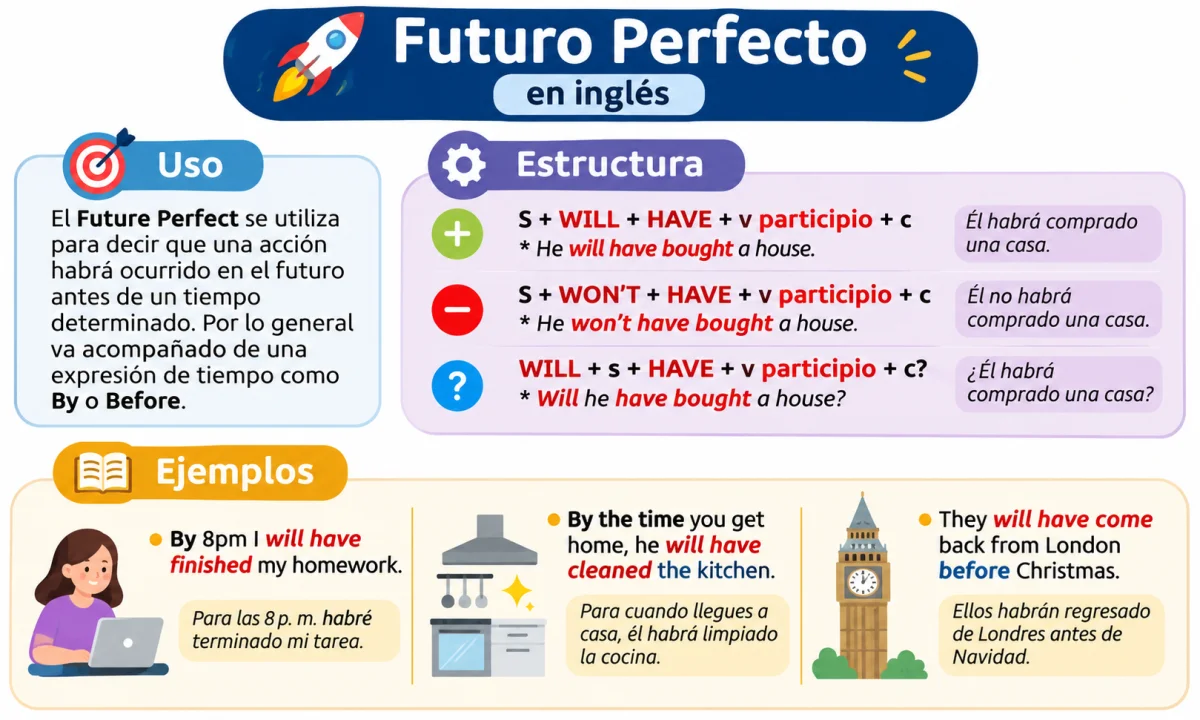
El future perfect es un tiempo verbal inglés que presenta una acción como ya completada antes de un momento futuro. La perspectiva parte del presente, avanza hasta un punto situado en el futuro y, desde allí, considera terminada una acción anterior. En español suele traducirse mediante el futuro perfecto: habré terminado, habrán llegado o se habrá publicado.

Cómo se forma
La estructura básica es sujeto + will have + participio pasado. El auxiliar will no cambia según la persona, have permanece en su forma base y el verbo principal aparece en participio pasado.
- Con verbos regulares, el participio suele terminar en -ed: will have opened.
- Con verbos irregulares, se emplea la forma correspondiente: will have written, will have gone, will have seen.
La contracción afirmativa es ’ll have: She’ll have completed the course. En la lengua cotidiana, las formas negativas más habituales son won’t have, aunque también es correcta la forma completa will not have.
El momento de referencia y los usos principales
Este tiempo se utiliza sobre todo cuando se quiere indicar que algo estará concluido antes de una fecha, una hora, otra acción futura o un acontecimiento determinado. Son frecuentes expresiones como by —para, antes de o a más tardar en—, before —antes de—, by the time —para cuando—, by then —para entonces— y by the end of —para el final de—.
También puede emplearse para hacer una suposición sobre una acción que, según el momento de referencia, probablemente ya se ha completado. El contexto debe dejar claro cuál es ese punto futuro.
- By the first week of April, the museum will have reopened. Para la primera semana de abril, el museo habrá reabierto.
- By the time the guests arrive, we will have prepared the garden. Para cuando lleguen los invitados, habremos preparado el jardín.
- The technician will have repaired the server before the office opens. El técnico habrá reparado el servidor antes de que abra la oficina.
- In three months, Nora will have completed her driving lessons. En tres meses, Nora habrá terminado sus clases de conducción.
- By then, the river will have returned to its normal level. Para entonces, el río habrá vuelto a su nivel normal.
- By the end of the exhibition, thousands of visitors will have seen the sculpture. Para el final de la exposición, miles de visitantes habrán visto la escultura.
- The store will have closed by nine o’clock. La tienda habrá cerrado para las nueve.
- Before the meeting begins, the director will have read the report. Antes de que comience la reunión, el director habrá leído el informe.
- By 2040, engineers will have developed more efficient batteries. Para 2040, los ingenieros habrán desarrollado baterías más eficientes.
- When you return from the trip, I will have organized the photographs. Cuando regreses del viaje, habré organizado las fotografías.
- The parcel will have reached the regional depot by tomorrow evening. El paquete habrá llegado al depósito regional mañana por la tarde.
- By the time the lesson ends, the class will have practiced all the new sounds. Para cuando termine la clase, el grupo habrá practicado todos los sonidos nuevos.
- They will have signed the agreement before the conference. Habrán firmado el acuerdo antes de la conferencia.
- By next winter, the town will have planted trees along the avenue. Para el próximo invierno, el pueblo habrá plantado árboles a lo largo de la avenida.
- The chef will have prepared the dessert when the first diners sit down. El chef habrá preparado el postre cuando se sienten los primeros comensales.
- By midnight, the volunteers will have collected enough blankets. Para medianoche, los voluntarios habrán reunido suficientes mantas.
- She will have learned the route by the day of the race. Ella habrá aprendido el recorrido para el día de la carrera.
- In a decade, the old bridge will have disappeared from the landscape. Dentro de una década, el puente antiguo habrá desaparecido del paisaje.
- By the next inspection, the factory will have replaced the damaged pipes. Para la próxima inspección, la fábrica habrá sustituido las tuberías dañadas.
- He will have sent the invitations before the weekend. Él habrá enviado las invitaciones antes del fin de semana.
- By the time the bus reaches the terminal, we will have traveled six hours. Para cuando el autobús llegue a la terminal, habremos viajado seis horas.
- The author will have finished the final chapter by August. El autor habrá terminado el capítulo final para agosto.
- By then, the children will have grown accustomed to the new school. Para entonces, los niños se habrán acostumbrado a la nueva escuela.
- The committee will have made its decision before the announcement. El comité habrá tomado su decisión antes del anuncio.
- By the end of the afternoon, the snow will have melted. Para el final de la tarde, la nieve se habrá derretido.
- When the festival starts, local artists will have decorated the main square. Cuando empiece el festival, los artistas locales habrán decorado la plaza principal.
- By next Monday, I will have renewed my passport. Para el próximo lunes, habré renovado mi pasaporte.
- The researchers will have published the results by the following spring. Los investigadores habrán publicado los resultados para la primavera siguiente.
- By the time the lights come on, the audience will have taken their seats. Para cuando se enciendan las luces, el público habrá ocupado sus asientos.
- She will have left the building before the security check begins. Ella habrá salido del edificio antes de que comience el control de seguridad.
Forma negativa
Para negar una acción se coloca not después de will: sujeto + will not have + participio. La contracción es won’t have. La negación puede referirse a una acción que no estará terminada en el plazo indicado, no necesariamente a una acción que nunca ocurrirá.
- The repairs will not have finished by lunchtime. Las reparaciones no habrán terminado para la hora del almuerzo.
- We won’t have received the documents before the hearing. No habremos recibido los documentos antes de la audiencia.
- By tomorrow, the wind will not have weakened. Para mañana, el viento no se habrá debilitado.
- She won’t have chosen a university by then. Ella no habrá elegido una universidad para entonces.
- The workers will not have painted the entire building by Friday. Los trabajadores no habrán pintado todo el edificio para el viernes.
- He won’t have returned from the conference when we call. Él no habrá regresado de la conferencia cuando llamemos.
- The store will not have opened before ten. La tienda no habrá abierto antes de las diez.
- I won’t have solved the puzzle by the end of the evening. No habré resuelto el acertijo para el final de la tarde.
- The committee will not have approved the proposal by June. El comité no habrá aprobado la propuesta para junio.
- They won’t have repaired the elevator before the inspection. No habrán reparado el ascensor antes de la inspección.
- The film will not have started when we enter the room. La película no habrá comenzado cuando entremos en la sala.
- By next month, the drought will not have ended. Para el próximo mes, la sequía no habrá terminado.
- My sister won’t have read the message by then. Mi hermana no habrá leído el mensaje para entonces.
- The company will not have reduced its expenses before the audit. La empresa no habrá reducido sus gastos antes de la auditoría.
- We won’t have visited the new gallery by the time it closes. No habremos visitado la nueva galería para cuando cierre.
- The package will not have been delivered by noon. El paquete no habrá sido entregado al mediodía.
- He won’t have remembered all the instructions. Él no habrá recordado todas las instrucciones.
- The students will not have completed the experiment before the bell. Los estudiantes no habrán terminado el experimento antes del timbre.
- They won’t have found a replacement until next week. No habrán encontrado un reemplazo hasta la próxima semana.
- The road will not have dried by sunrise. La carretera no se habrá secado al amanecer.
- I will not have saved enough money for the course by September. No habré ahorrado suficiente dinero para el curso para septiembre.
- The players won’t have recovered before the next match. Los jugadores no se habrán recuperado antes del próximo partido.
- The old computers will not have been removed by the renovation. Los ordenadores antiguos no habrán sido retirados para la renovación.
- She won’t have spoken with the manager when you arrive. Ella no habrá hablado con la gerente cuando llegues.
- The council will not have reached an agreement by the deadline. El ayuntamiento no habrá alcanzado un acuerdo para la fecha límite.
Preguntas y respuestas
En las preguntas de respuesta sí o no, will se coloca antes del sujeto: Will + sujeto + have + participio?. En las preguntas con palabras interrogativas, la palabra interrogativa aparece al principio y después se mantiene la inversión correspondiente.
- Will you have mailed the form by Thursday? ¿Habrás enviado el formulario para el jueves?
- Will the guests have arrived before dinner? ¿Habrán llegado los invitados antes de la cena?
- What will the team have achieved by the end of the season? ¿Qué habrá conseguido el equipo para el final de la temporada?
- Will the archaeologists have examined the site by then? ¿Habrán examinado el lugar los arqueólogos para entonces?
- Where will she have stored the equipment? ¿Dónde habrá guardado ella el equipo?
- Will the temperature have dropped below zero overnight? ¿Habrá bajado la temperatura de cero durante la noche?
- Which route will they have taken by the time we find them? ¿Qué ruta habrán tomado para cuando los encontremos?
- Will you have finished the presentation before the interview? ¿Habrás terminado la presentación antes de la entrevista?
- How many chapters will he have translated by July? ¿Cuántos capítulos habrá traducido para julio?
- Will the orchestra have rehearsed the new piece by Friday? ¿Habrá ensayado la orquesta la pieza nueva para el viernes?
- Who will have reserved the conference room? ¿Quién habrá reservado la sala de conferencias?
- Will the storm have moved away before the ships leave? ¿Se habrá alejado la tormenta antes de que zarpen los barcos?
- How much will the renovation have cost by the end of the year? ¿Cuánto habrá costado la renovación para el final del año?
- Will they have installed the solar panels by winter? ¿Habrán instalado los paneles solares para el invierno?
- Why will the laboratory have closed by that date? ¿Por qué habrá cerrado el laboratorio para esa fecha?
- Will the doctor have reviewed the results before the appointment? ¿Habrá revisado el médico los resultados antes de la cita?
- How many countries will she have visited by her thirtieth birthday? ¿Cuántos países habrá visitado para su trigésimo cumpleaños?
- Will the bridge have reopened when the parade begins? ¿Habrá reabierto el puente cuando comience el desfile?
- What will they have learned from the survey? ¿Qué habrán aprendido de la encuesta?
- Will the gardeners have planted the bulbs by October? ¿Habrán plantado los bulbos los jardineros para octubre?
- Which applicant will have been selected? ¿Qué candidato habrá sido seleccionado?
- Will the children have packed their bags before dawn? ¿Habrán preparado sus bolsos los niños antes del amanecer?
- How long will you have worked at the library by then? ¿Cuánto tiempo habrás trabajado en la biblioteca para entonces?
- Will the plane have landed before the fog returns? ¿Habrá aterrizado el avión antes de que vuelva la niebla?
- Where will the organizers have placed the signs? ¿Dónde habrán colocado los organizadores las señales?
- Will the musicians have learned the entire program by the concert? ¿Habrán aprendido los músicos todo el programa para el concierto?
- How many applications will the office have processed by noon? ¿Cuántas solicitudes habrá tramitado la oficina para el mediodía?
- Will the witness have given a statement before the trial? ¿Habrá declarado el testigo antes del juicio?
Cláusulas temporales y voz pasiva
Cuando una oración contiene una cláusula temporal introducida por when, before, after, until o by the time, normalmente se utiliza presente simple en esa cláusula, aunque el significado sea futuro. El will queda en la oración principal.
- We will have locked the doors by the time the caretaker arrives. Habremos cerrado las puertas para cuando llegue el encargado.
- She will have prepared the slides before the seminar begins. Ella habrá preparado las diapositivas antes de que empiece el seminario.
La voz pasiva conserva el auxiliar will have y añade been antes del participio: sujeto + will have been + participio.
- The new clinic will have been completed by December. La nueva clínica habrá sido terminada para diciembre.
- All the tickets will have been sold before the doors open. Todas las entradas habrán sido vendidas antes de que se abran las puertas.
Future perfect y future perfect continuous
No debe confundirse el future perfect con el future perfect continuous. El primero destaca que una acción estará completada: By noon, she will have written the report. El segundo, formado con will have been + verbo terminado en -ing, subraya la duración o la continuidad de una actividad hasta un momento futuro: By noon, she will have been writing for four hours.
Por tanto, expresiones como will have been working, will have been living o will have been studying pertenecen al future perfect continuous, aunque se relacionan estrechamente con el future perfect. Para indicar una cantidad de tiempo, suelen aparecer for y since.
Vídeo explicativo
Autor
 Clara Bennett
 ha desarrollado su trayectoria en torno al inglés, la enseñanza de idiomas y la divulgación cultural. Su interés se centra en la gramática, el vocabulario, la comprensión y el uso práctico de la lengua, explicando cada concepto de forma clara, cercana y accesible para todo tipo de público.